What actually works out here
Dock myths vs ocean reality — which kinds of boats keep you going on real miles, from a cruiser living Florida to Vanuatu on a Leopard 45.
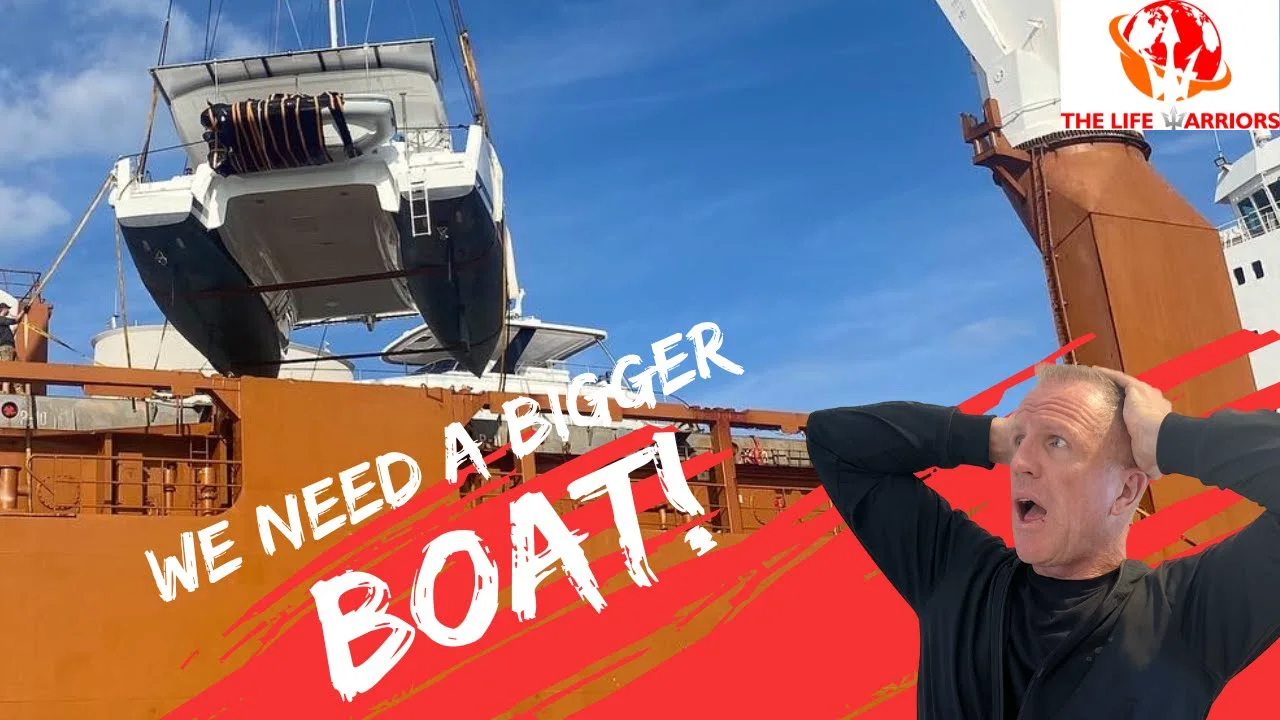
At the dock, every boat is a world-cruiser if the sunlight hits the gelcoat right.
Out here — after more than 16,000 nautical miles as a family, across both our boats, and with Warrior, our 2021 Leopard 45, on the way from Florida to Vanuatu — the sales language gets quieter. Weather doesn’t care what the brochure promised. Systems don’t care how “offshore-ready” the sticker sounded in the slip. Crew doesn’t care about internet arguments. The only question that keeps scoring points is simple: does this boat let us keep going?
I’m not writing this as your broker. I’m not licensed for that yet, and I won’t pretend otherwise. I’m writing as a cruiser who’s been living the experiment — and who wants the next chapter of this brand (eventually brokerage, honestly framed) to rest on truth, not theater.
Dock myths that melt in salt air
Myth: bigger always means safer.
Sometimes bigger means more systems, more spares, more things that can quit on the same Tuesday. Size helps with motion and storage. Size also multiplies complexity. The right size is the one your crew can actually run when you’re tired.
Myth: “offshore passage making” is a breed, not a condition.
Plenty of boats labeled for oceans never leave the coast. Plenty of so-called coastal boats have circled the planet in careful hands. Labels are a starting point. Maintenance history, rig, through-hulls, tankage, redundant power and water, and how the boat treats people on watch — those are the chapters that matter.
Myth: discomfort proves seriousness.
Suffering is not a virtue. A boat that wrecks sleep wrecks judgment. Out here, comfort isn’t luxury branding — it’s operational. Rested crew make better calls. That’s not soft. That’s how you stay in the game.
Myth: you buy the dream, then learn the systems.
You can. People do. It’s also how “someday” turns into an expensive marina pet. The boats that work out here are the ones whose owners treat systems as part of the voyage, not an optional hobby.
What “works” actually means underway
When I say a boat works out here, I mean something plainer than brand loyalty:
- It carries enough fuel, water, and redundancy for your kind of passages — not someone else’s Instagram.
- Critical gear can be reached, diagnosed, and (often) fixed without a shipyard on speed dial.
- The motion and layout let your crew sleep and eat enough to stay kind.
- You can keep the boat moving without needing to be a hero every afternoon.
On Warrior, that’s been the quiet curriculum. Catamaran life isn’t a purity contest win. It’s a set of tradeoffs we live with: space and stability for family cruising; systems that demand attention; comfort that earns its keep on long miles. Traditional heavy monohulls earn respect for different reasons. Both can sail the world. Neither gets a free pass from physics or neglect.
I’ll go deeper on modern production cruisers versus old-school tanks in the next piece. For now, hold this: capability is proven in use, not in the adjective on the listing.
There’s a kindness in admitting what you don’t know yet. Out here, that kindness looks like leaving margin — in weather windows, in spare parts, in ego. The boats that “work” are often the ones paired with owners who still ask questions after the purchase papers cool.
How to use this if you’re shopping
If you’re staring at two boats and your head is loud, try a shorter filter than “which one looks toughest”:
- Where will we actually go in the next two years — not the fantasy decade?
- What fails first on boats like this, and can we live with that failure mode?
- Can we afford the truth of ownership (survey, refit, spares, time) — not just the purchase?
- Will this boat make us more likely to cast off — or more likely to keep preparing forever?
I’m a NauticEd instructor and a PADI scuba instructor. Those credentials help me teach. They don’t replace sea time, and they don’t turn a dock decision into destiny. Lived miles do more talking than titles.
Beth and I have made boat choices as a family, not as a committee of YouTube comments. If you have a partner in the dream, bring them into the filter early. A hull that only one of you loves becomes a floating argument.
Own the decision, not the myth
You own your outcome — including which stories you believe before you wire money.
The ocean will edit the brochure. Your job is to choose a boat that still makes sense after the edit: honest systems, honest crew fit, honest budget. That’s what works out here.
If you’re stuck between two boats and want a clarity conversation — not a sales pitch — that’s what coaching is for. When brokerage is licensed later, the standard stays the same: truth over theater.
We’re still underway. Still learning. Still choosing the next chapter on purpose.
— Dave